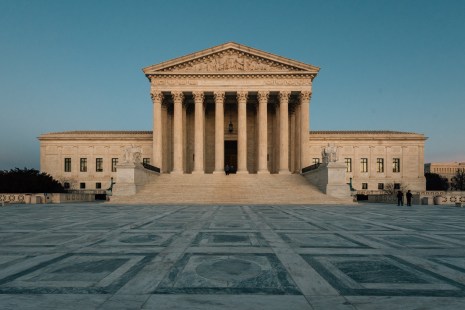
For the first time in some time, the United States Supreme Court agreed to hear a case involving the corporate attorney–client privilege.  The issue is the proper standard courts should use to determine whether the attorney–client privilege protects dual-purpose communications—those created for legal and non-legal purposes.  In re Grand Jury, No. 21–1397 (U.S.).  The specific question presented is—

Whether a communication involving both legal and non-legal advice is protected by attorney–client privilege where obtaining or providing legal advice was one of the significant purposes behind the communication.

In a series of posts, I’ll follow and comment on the case and final decision.  I previously examined the Court of Appeals’ decision and will now tackle the appellant’s petition for writ of certiorari, the opposition, and the amici positions. I later explore the petitioner’s merits arguments, the positions of fourteen amici, and the government’s opposition.

Petition for Writ of Certiorari

While grand jury subpoenas were issued to the target’s company and law firm, only the law firm withheld dual-purpose communications on privilege grounds, making the law firm the lone petitioner.  The petitioner–law firm put forward three arguments: (1) a circuit split exists over proper privilege application to dual-purpose communications; (2) the Ninth Circuit’s standard is impractical and would chill attorney–client communications; and (3) this case offers a rare vehicle for Supreme Court review on an exceptionally important issue.  You may read the petition here.

A Circuit Split Exists

The Petitioner identified a three-way split among the circuits regarding how to apply the attorney–client privilege to dual-purpose communications.  First, the D.C. Circuit applies the privilege to a dual-purpose communication so long as one of its primary purposes is to provide or obtain legal advice. In re Kellogg Brown & Root, Inc., 756 F.3d 754 (D.C. Cir. 2014) (Kavanaugh, J.) (discussed in this blog post); FTC v. Boehringer Ingelheim Pharmaceuticals, Inc., 892 F.3d 1264 (D.C. Cir. 2018) (Kavanaugh, J.) (discussed in this blog post).

Second, the Ninth Circuit, in the underlying case, adopted “the primary purpose” test, which necessarily tasks the trial court with weighing a communication’s various purposes and determining whether the primary one is legal-advice related.  The Petitioner described this test as follows (citations omitted):

If a non-legal purpose is the more significant motivator, then the communication is not privileged. If a legal purpose is the more significant motivator, then the communication is not privileged.  Only in the “narrow universe” of cases where two purposes are in equipoise is it an open question in the Ninth Circuit whether the communication is privileged.

Third, the Seventh Circuit has taken, according to the Petitioner, “an even more extreme approach than the Ninth Circuit.”  At least in tax-related cases, the privilege never protects dual-purpose communications. United States v. Frederick, 182 F.3d 496, 501 (CA7 1999).  The Petitioner acknowledged, however, that a district court within the Seventh Circuit, in a non-tax case, found this dual-purpose issue open and applied the D.C. Circuit standard, citing Smith-Brown v. Ulta Beauty, Inc., 2019 WL 2644243 (N.D. Ill. June 27, 2019), which I discussed in detail in Court Adopts “Primary Purpose” Test for In-House Counsel’s Dual-Purpose Emails.

The Ninth Circuit’s Standard “Is Wrong”

The Petitioner stated the privilege’s purpose is “to encourage full and frank communication between attorneys and their clients,” citing Upjohn Co. v. United States, 449 U.S. 383 (1981).  Without a firm promise of confidentiality, however, clients will be reluctant to provide candid information and lawyers will be reluctant to give their clients all-embracing legal advice.  The Ninth Circuit’s adopted test “is wrong,” the Petitioner argued, because it frustrates this purpose in two ways.

First, the test “creates intolerable uncertainty” in privilege application because “the test is difficult, if not impossible, to apply.”  Moreover, asking trial courts to weigh competing purposes is essentially asking them to engage in “an artificial and unworkable exercise.”

Second, this unpredictability will chill communications between clients and their lawyers because asking judges to conduct a weigh-and-balance approach—long after the communication was created—will make some clients reluctant to provide information to their lawyers.

Rare Situation

The Petitioner emphasized that this case presents an “excellent vehicle” for the Court to consider this tremendously important privilege issue, primarily because “appellate decisions regarding privilege are relatively rare.”  Most privilege opinions are not immediately appealable following the Court’s decision in Mohawk Indus. v. Carpenter, 558 U.S. 100 (2009) (ruling that the parties may not appeal adverse privilege opinions under the collateral-order doctrine) (read the opinion here).  And with interlocutory appeal and mandamus petitions difficult to obtain, “most litigants must wait until after a final judgment to appeal an adverse privilege decision.” In sum,

The Court may not have another opportunity to address the question presented for many years.  Particularly given the need for clarity in this area of law, the Court should take up the issue now.

Amicus Parties

Three amicus parties supported the Petitioner’s writ of certiorari.  The California Lawyers Association, in an amicus brief available here, urged the Court to grant the petition because this privilege issue “has widespread significance” that affects “attorneys in nearly every conceivable area of practice.” This group argued for the “a primary purpose” test adopted in Kellogg.

The Washington Legal Foundation, in an amicus brief available here, argued that the Ninth Circuit’s approach would “cripple corporate compliance programs.”  The WLF feared that the Ninth Circuit’s approach would strip the privilege “where corporate policy encourages employees to report legally significant facts to in-house lawyers,” which would, in essence, penalize companies with compliance programs.

The U.S. Chamber of Commerce offered its opinions in an amicus brief available here. The Chamber urged the Court to “seize this golden opportunity” to resolve a circuit split over this privilege issue.  The Chamber criticized the Ninth Circuit’s standard as not understanding “the modern role that lawyers play in advising businesses.”  In particular, this test will marginalize in-house lawyers, “whose responsibilities often include a multitude of non-legal tasks.”

Government’s Opposition

The United States responded that the District Court and the Ninth Circuit properly rejected privilege protection for the tax-related documents at issue in this case and that Ninth’s Circuit’s decision “does not implicate any conflict among the court of appeals.”  Emphasizing that the privilege issue here concerns tax advice, coupled with the lack of a federal common-law accountant–client privilege (read more about that in this blog post), the government argued that the Ninth Circuit properly used and applied the primary purpose test.

The government distinguished the Kellogg rule, saying that Kellogg involved an internal investigation where the D.C. Circuit reversed the district court’s use of a “sole purpose” standard. The Ninth Circuit used the primary purpose test and did not look for the sole purpose.  Indeed, the court permitted redactions of legal advice, it just did not shield the business advice.  In short, the Ninth Circuit’s

Application of the primary purpose approach did not require the disclosure of any legal advice that could be redacted.

The Ninth Circuit’s decision, the government argued, did not conflict with Kellogg because the Ninth Circuit “left open” that question for future cases.  And the Seventh Circuit’s tax-related primary-purpose rule was cabined to, well, tax cases.  Moreover, because this case arises in the tax context, “this case would be a poor vehicle for further review of the question presented.”

Court Grants the Petition for Writ of Certiorari

The Supreme Court granted the writ of certiorari on October 3, 2022.  Now, on to the merits briefing.

For the first time in some time, the United States Supreme Court agreed to hear a case involving the corporate attorney–client privilege.  The issue is the proper standard courts should use to determine whether the attorney–client privilege protects dual-purpose communications—those created for legal and non-legal purposes.  In re Grand Jury, No. 21–1397 (U.S.).  The specific question presented is—

Whether a communication involving both legal and non-legal advice is protected by attorney–client privilege where obtaining or providing legal advice was one of the significant purposes behind the communication.

In a series of posts, I’ll follow and comment on the case and final decision.  We begin by discussing the decision rendered by the Ninth Circuit Court of Appeals.  In re Grand Jury, 23 F.4th 1088 (CA9 2021).  You may read the opinion here. I later explore the parties’ arguments at the petition stage, the petitioner’s merits arguments, the positions of fourteen amici, and the government’s opposition.

U.S. Supreme Court to Decide Attorney-Client Privilege Issue

Grand Jury Investigation and a Contempt Order

A law firm that specializes in international tax issues provided an individual with tax advice related to expatriation, including how to determine ownership of cryptocurrency assets, methods of asset evaluation, and tax-filing strategies. The firm also prepared several of its client’s tax returns, including certification of compliance with expatriation tax requirements.

Federal prosecutors targeted the law firm’s individual client and issued a grand jury subpoena to the law firm.  The law firm produced some documents but withheld others on grounds that the corporate attorney–client privilege protected them from disclosure.  The government moved to compel the putatively privileged documents.

The U.S. District Court for the Central District of California found that many of the law firm’s withheld documents were dual-purpose communications, meaning they pertained to business and legal issues.  The court ultimately ruled that the privilege did not protect these documents because “the primary purpose” of the communications were to secure tax advice, not legal advice.

The law firm disagreed with the court’s ruling and refused to produce the documents.  The court held those entities in contempt but stayed that sanction so that the law firm could appeal to the Ninth Circuit.

The Legal Issue

The Ninth Circuit immediately recognized that, in “our increasingly complex regulatory landscape,” attorneys “wear dual hats” and often serve a client as a lawyer and “trusted business advisor.”  The record is sealed, making it difficult to ascertain the full nature of the business-legal mixture at issue, but we know that the at-issue communications pertained to tax advice and legal advice.

The court recognized that the attorney–client privilege does not protect all tax-related communications. It compared, for example, a client’s communications to his lawyer regarding W-2 information, which the privilege does not protect, with the client’s seeking advice about what to claim on a tax return, which the privilege covers.  Tax-related communications, therefore, can have dual purposes, some that are non-legal, like compliance issues, and some that are quite legal, such as seeking advice when the IRS challenges a deduction.

The question, therefore, was how the court should apply the attorney–client privilege to these dual-purpose communications.  The court recognized, though, that—

the Ninth Circuit has yet to articulate a consistent standard for determining when the attorney–client privilege applies to dual-purpose communications that implicate both legal and business concerns.

Potential Standards

The court evaluated two potential standards or tests to determine whether the attorney–client privilege covers dual-purpose communications.  The law firm interestingly advocated for a “because of” standard.  This standard derives from work-product doctrine, which I discussed in my assessment of Microsoft’s work-product loss for dual-purpose tax communications.  When applied in the attorney–client privilege context, the standard protects dual-purpose communications when created because of anticipated litigation and “would not have been created in substantially similar form but for the prospect of litigation.”

The other standard for consideration was “the primary purpose” test, which directs courts to “look at whether the primary purpose of the communication is to give or receive legal advice” as opposed to business-related, non-legal advice, which, in the case, meant tax advice.  The court correctly noted that—

the natural implication of this inquiry is that a dual-purpose communication can only have a single “primary” purpose.

Ruling

Citing to United States v. Sanmima Corp., which I discussed in Ninth Circuit Adopts Work-Product Waiver Standard—In-House Counsel Memos Partially Survive, the Ninth Circuit observed that it had not adopted a standard for dual-purpose communications in the privilege context, which left no guidance for its district courts, which had been “applying both tests for attorney–client privilege claims.”

The court determined that “the primary purpose standard test applies to attorney–client privilege claims for dual-purpose communications.”  It rooted its decision in federal common law, which holds that the privilege extends to those communications made for “the purpose of facilitating the rendition of professional legal services.” The scope of the privilege, the court held, “is defined by the purpose of the communication consistent with the common law.” (emphasis added).

The court easily rejected the “because of” standard.  The privilege focuses on the purpose of the communication, not “its relation to anticipated litigation.”  The work-product doctrine and attorney–client privilege, while often asserted together, arise from different policy goals.  The work-product doctrine preserves that “zone of privacy” to allow lawyers and their clients to develop legal theories and litigation strategy without intrusion from adversaries. 

The privilege, on the other hand, encourages full and frank communications between lawyers and their clients so that lawyers can provide optimal legal advice—advice that may not have anything to do with existing or anticipated litigation.  These policy differences, therefore, signify that it “makes sense to have different tests for the two.”

What about Justice Kavanaugh’s Standard?

In two opinions issued while on the D.C. Circuit Court of Appeals, then-Judge Kavanaugh criticized “the primary purpose” test and, instead, adopted “a primary purpose” test.  For a greater discussion of these opinions adopting and applying this differing standard, you may read Significant D.C. Circuit Decision for Attorney–Client Privilege and Internal Investigations, examining In re Kellog, Brown & Root, Inc., 756 F.3d 754 (D.C. Cir. 2014), and SCOTUS Nominee’s Latest Privilege Opinion: A Win for Corporate Legal Counsel, examining Federal Trade Comm’n v. Boehringer Ingelheim Pharmaceuticals, Inc., 892 F.3d 1264 (D.C. Cir. 2018).

In short, Judge Kavanaugh found that district courts should not try to find the one primary purpose of a communication, which “can be an inherently impossible task.”  From a practical standpoint, he found, it is “not useful or even feasible to try to determine whether the purpose was A or B when the purpose was A and B.”  As a result, Judge Kavanaugh reframed the question to this:

Was obtaining or providing legal advice a primary purpose of the communication, meaning one of the significant purposes of the communication?

We See the Merits

The Ninth Circuit saw “the merits of the reasoning” explained by Judge Kavanaugh, but also saw “no reason to adopt that reasoning in this case.”  Further, the court raised a distinction between applying the “a primary purpose” test to internal investigations, which was at issue in Kellogg, and tax/legal advice at issue before the grand jury.  In the end, the court settled on “the primary purpose” test, in part, because applying the “a primary purpose” standard would have made little difference in the outcome.

The law firm filed its Petition for Certiorari on April 5, 2022, and the Supreme Court granted it on October 3, 2022.  Let’s see where it goes.

Companies often have policies requiring internal investigations of alleged misconduct.  A common example is a company’s policy to investigate all claims of sexual harassment.  And when companies engage outside counsel to conduct these investigations, thorny privilege issues—to the surprise of many—can arise.  The question arises whether a policy-mandated internal investigation can ever be a “privileged investigation.”  In other words, are investigations for legal-advice purposes and investigations pursuant to policies mutually exclusive, with the privilege protecting the former but not the latter?

Public policy supports both efforts.  If misconduct occurs within a company, whether supervisor harassment, bribery of foreign officials, and the like, mandatory-investigation policies fulfill the public policy of identifying and eradicating bad behavior.  Public policy also promotes the company’s need for optimal legal advice on how to handle the investigation results, which can only occur when company employees have candid discussions with company lawyers.  The attorney–client privilege implements that public policy.

The D.C. Circuit Viewpoint

You will find a good discussion of this issue in a D.C. Circuit opinion, In re Kellogg Brown & Root, 756 F.3d 754 (D.C. Cir. 2014), authored by then-Judge Kavanaugh.  In that case, a company policy and a Department of Defense regulation required the company to investigate a bribery allegation.  Yet, the court—applying federal privilege law—held that the attorney–client privilege nevertheless protected the investigation-related communications.  The court said—

In the context of an organization’s internal investigation, if one of the significant purposes of the internal investigation was to obtain or provide legal advice, the privilege will apply. That is true regardless of whether an internal investigation was conducted pursuant to a company compliance program required by statute or regulation, or was otherwise conducted pursuant to company policy.

You may read more about this important decision in my post, Significant D.C. Circuit Decision for Attorney–Client Privilege and Internal Investigations.

The North Carolina Situation

To be sure, other courts eschew the D.C. Circuit’s “one of the significant purposes” standard in favor of “the primary purpose” benchmark.  In 2021, the North Carolina Supreme Court, in an unpublished opinion, affirmed a Business Court ruling stating that, “when communications contain intertwined business and legal advice, courts consider whether the ‘primary purpose’ of the communication was to seek or provide legal advice.”  Window World of Baton Rouge, LLC v. Window World, Inc., 2019 WL 3995941, at *25 (N.C. Super. Aug. 16, 2019), aff’d per curiam, Window World of Baton Rouge, LLC v. Window World, Inc., 857 S.E.2d 850 (N.C. 2021).

A Policy, an Investigation, and a Coverage Dispute

The law firm Buckley, LLP maintains a Harassment-Free Policy that has this investigation requirement:

All reported or reasonably suspected occurrences of harassment will be investigated … in a confidential manner and as promptly and thoroughly as is practicable and necessary.

After a Buckley employee accused one of the firm’s senior lawyers of harassment, the firm retained Latham & Watkins to investigate.  Following the investigation, Buckley sought coverage from its insurance carrier, and sued the carrier when it denied responsibility.  The insurance company sought communications arising from Latham’s investigation, but Buckley refused, asserting that the attorney–client privilege protected those communications from discovery.

Investigation’s Purpose

The privilege question turned on whether Buckley retained Latham because the firm’s policy mandated it (business purpose) or so the firm could obtain Latham’s legal advice on how to deal with the investigation’s results (legal purpose).

We know that a law firm’s engagement agreement can provide evidence of an investigation’s purpose.  For example, the University of Iowa lost a privilege battle, in part, due to its law firm’s engagement letter while an Illinois company won a privilege clash, in part, because of a lawyer’s engagement letter.

So, would Latham’s engagement letter persuade the judge that its investigation was for legal-advice reasons and, therefore, privileged?

Engagement Letter, Lawyer’s Affidavit, and Contrary Testimony

Latham’s engagement letter, which you may read in full here, contained two succinct statements about the scope if its representation.  It opened with this description of “Legal Services”:

The letter also described its responsibilities as follows:

To buttress that the investigation pertained to legal advice, a Latham lawyer submitted a declaration, which you may review in full here, describing the firm’s legal functions this way—

But in deposition testimony, one of the Buckley partners said this about the investigation:

Business Court Ruling

In its opinion, available here, the Business Court first noted that, generally, company materials created “pursuant to a company policy” are discoverable.  Then, citing in part to then-Judge Kavanaugh’s Kellogg opinion, the court stated that “the relevant question is not whether” Buckley retained an attorney “to conduct an investigation, but rather, whether this investigation was related to the rendition of legal services.”  Thus, “an investigating attorney’s communications in the course of an investigation are not necessarily cloaked with privilege.”

Note the phrase “not necessarily.”

Citing Buckley’s mandatory-investigation policy, the court found the evidence “clear” that “the investigation Buckley retained Latham to perform was one required under Buckley’s firm policies as part of Buckley’s internal complaint procedure.”  The court also found that the investigation was “consistent with Buckley’s business practice” because of the Buckley partner’s testimony that the investigation “was the right thing to do” and consistent with the firm handbook.

“As such, the evidence shows that the investigation was initiated and pursued in the ordinary course of Buckley’s business,” the court concluded.

But a Law Firm Investigated!

Buckley’s retention of a law firm did “not change this fact.”  And while the Latham lawyer’s affidavit stated that the firm performed legal functions, the court stated that this “testimony on its own does not serve to cloak all of Latham’s investigatory work with attorney–client privilege.”

Yet that testimony was not “on its own”—the court had Latham’s engagement letter stating that Buckley retained Latham to provide legal services related to its investigation.  But that letter, according to the court, “cannot reclassify nonprivileged communications as ‘legal services’ in order to invoke the attorney–client privilege.”

Despite this business-purpose finding, the court also found that Buckley retained Latham to provide legal services “apart from its investigative efforts.”  While not expressly clear, it appears the Business Court found that there was no legal-advice purpose for Latham’s investigation but there was a legal-advice purpose for other services.

In camera Review—Why?

Following briefing and oral argument, the Business Court ordered Buckley to submit the 157 documents for in camera review. But why?  If Latham’s investigation was for business purposes, then the court could have simply ordered Buckley to produce investigation-related communications and designate the non-investigation communications on a privilege log.

The court was skeptical of Buckley’s privilege designations, not because of any bad faith, but because “determinations required in assessing whether … outside investigatory counsel has engaged in business or legal advice can be difficult to make and that reasonable minds can differ in good faith.”  You may read the in camera order here.

The court reviewed the 157 documents and designated them as privileged and nonprivileged, with most falling in the nonprivileged category.

The Appeal

The ruling troubled Buckley because it interpreted the Business Court’s ruling as establishing a bright line—if a company maintains a policy requiring an investigation upon the occurrence of some event, then the company can never claim privilege over the investigation.  This, in Buckley’s view, would deter companies from establishing mandatory-investigation policies.

On the one hand, the court said an attorney’s communications during an investigation are “not necessarily privileged.”  But on the other hand, it effectively held that Buckley’s mandated-investigation policy meant that the privilege does not protect investigation-related communications.

N.C. Supreme Court Ruling

In a three-page, per curiam opinion, the Supreme Court adopted the Business Court’ opinion without much additional elaboration, and said this—

In today’s business world, investigations of alleged violations of company policy, including policies prohibiting sexual harassment or discrimination, are ordinary business activities and, accordingly, the communications made in such investigations are not necessarily made in the course of giving or seeking legal advice for a proper purpose.

Again, note the “not necessarily” phrase.

So, the Court continued, “when communications contain intertwined business and legal advice, courts consider whether the primary purpose of the communication was to seek or provide legal advice.”

The Court found that the Business Court “properly interpreted North Carolina law” when it determined that Latham’s investigation “had both business and legal purposes” and conducted in camera review to distinguish between the two for each communication.

Buckley, LLP v. Series 1 of Oxford Ins. Co., NC, LLC, 2020 WL 6696138 (N.C.B.C. Nov. 9, 2020), aff’d, 876 S.E.2d 248 (N.C. 2022).  You may read the short opinion here.

POP Analysis

Lawyers can reasonably have concern about this ruling due to what appear to be express and subtle inconsistencies.  The Business Court found that Buckley retained a law firm to conduct an investigation for a business purpose—to fulfill its policy obligations. Yet the Supreme Court stated that the lower court ruled that the law firm led the investigation for business and legal purposes and approved of the primary purpose test to determine whether the privilege applied.

The Business Court cited approvingly of Kellogg, which rejected the primary purpose test in favor of a “one of the significant purposes” test, but nevertheless applied the primary purpose test without explaining its rationale. One can reasonably conclude that the court would have ruled that the privilege covered the investigation had it applied the Kellogg standard.

For now, the decision should cause lawyers to reconsider the beginning of internal investigations.  Those seeking disclosures of a company’s internal investigation will focus heavily on whether the company maintains a mandatory-investigation policy and claim “no privilege!” when it finds one. Companies with those policies can either discard them, which is antithetical to good business practice, or be more deliberate about the purpose of their investigation through well-worded engagement letters with outside counsel or investigation-initiation documents for investigations led by in-house lawyers, identifying and documenting the legal purpose for the investigation, and maintaining good privilege practice during those investigation interviews, summaries, and reports.

Although the subject of academic debate, many scholars agree that the privilege against self-incrimination arose in part from growing opposition to the ecclesiastical oath during the seventeenth century.  Invoking the Latin phrase nemo tenetur prodere seipsum, meaning no one is bound to accuse himself, criminal defendants began refusing courts’ mandate that they take an oath and answer the prosecution’s questions.  This opposition evolved into a common-law evidentiary privilege and ultimately a constitutional right embedded in the Fifth Amendment.

Fast forward to the twenty-first century, courts want in-house lawyers to take an oath—not to answer questions about criminal wrongdoing but to prove with specificity that the attorney–client privilege protects from disclosure their communications with corporate employees.  The oath in these situations surfaces in the form of an affidavit or a sworn declaration, and the in-house lawyer should consider—at the time of asserting a privilege objection—whether she is willing to supply a sworn statement in defense of the objection. The answer is often pivotal to securing privilege protection.

In my Privilege Place column published in Today’s General Counsel, I discuss in-house lawyers’ evidentiary burden to secure privilege protection for their employee communications–and when they should first consider this important issue. You may read the article as part of the entire issue at this link, or via PDF here.

The pandemic ushered in a panoply of behavioral changes in the workplace, ranging from virtual conferences to repetitive use of now tiresome phrases such as “these uncertain times” and “the new normal.” These changes continue to evolve as organizations grapple with permanent work from home, all-office, or hybrid office solutions. In the area of corporate communications, a rising concern is whether these behavioral transformations altered lawyers’ ethical duties of confidentiality and protection measures for the corporate attorney-client privilege. The answer evokes another aphorism — the more things change, the more they stay the same.

In my Privilege Place column published in Today’s General Counsel, I discuss how the work environment has changed for in-house lawyers in a way that increases the chances of losing, or failing to secure, privilege protection, and offer some tips on how to combat this emerging problem. You may read the article as part of the entire issue at this link, or via PDF here.